Gyms, sports centres and swimming pools draw crowds at predictable times: early workouts, after-school lessons, weekend matches and evening classes. Those peaks bring cars, cyclists and walkers through the same entrances, and a vehicle speed sign at the approach gives every arriving driver an instant, visible reminder of their speed at the moment it matters most.
The danger is rarely reckless driving. It is ordinary drivers arriving in a hurry, parents dropping children off, or members circling for a space while glancing at their phones. Around venues where children cross car parks and families arrive on foot, extra stopping distance is the difference between a near miss and a collision.
How Speed Feedback Changes Driver Behaviour
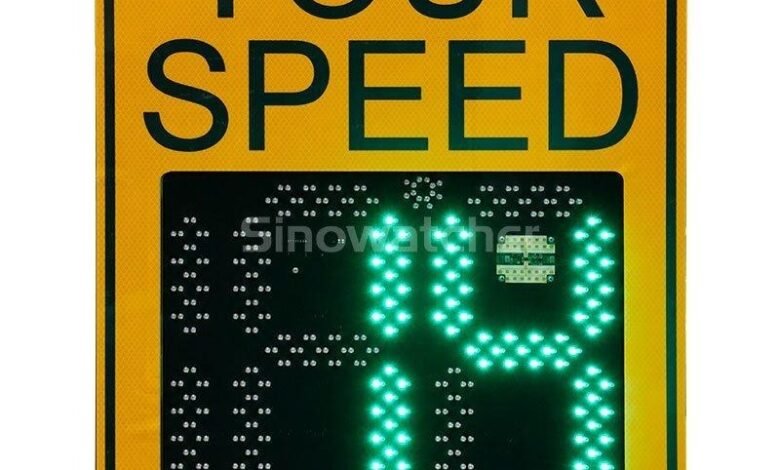
A vehicle speed sign shows drivers their actual speed on a bright LED speed display as they approach. The feedback is immediate and personal, and when the display turns red above the threshold, most drivers slow down without any enforcement. The FHWA national demonstration project (FHWA-HRT-14-020, January 2015, Iowa State University) tested dynamic speed feedback signs at 22 rural two-lane curve sites in 7 US states and found mean speed decreases of up to 10.9 mph, with effects holding for 24 months.
Why Leisure Venues Need Their Own Approach
Leisure sites are not ordinary roads. Visitor numbers spike around class times and events, then fall away almost completely between sessions. A road quiet at midday can be congested at 5 pm when a swimming gala ends and hundreds of families leave at once. Children run between parked cars, gym members arrive with headphones on, and older visitors cross slowly. Good placement follows these principles:
- Position the sign 50 to 100 metres before the main entrance, so drivers can slow before reaching pedestrians.
- Face the display toward incoming traffic with a clear line of sight and no obstructions.
- Mount the sign at driver eye level so the reading is visible without distraction.
- Place a second sign at the exit if vehicles regularly leave at speed after evening events.
Choosing the Right Sign for a Leisure Site
The most effective option for most leisure venues is a solar radar speed sign with a red and green LED display. Green confirms a safe speed, red warns of overspeed, and the colour change alone prompts most drivers to ease off. A 24 GHz Doppler radar detects approaching vehicles accurately. When choosing a sign, managers should weigh these points:
- Detection range: a unit detecting 10 to 250 km/h with accuracy of plus or minus 1 km/h covers every approach speed.
- Visibility: a bright display with high brightness and reflective film stays readable in sunlight and at dusk.
- Power source: solar for remote approaches, mains where a supply is already close by.
- Data logging: speed data logging with export helps managers prove the sign is working.
Managing Car Parks and Pedestrian Entrances
Inside the car park, speeds should be lower still. A clear speed reminder at the entrance tells drivers to drop to walking pace, and clear markings, speed humps and raised crossings reinforce the message. The point where the main footpath meets the vehicle route is the highest-risk spot on most leisure sites. Smart crossing systems add signal lights with countdowns, LED road studs and warning bollards with audio alerts. A practical car park safety plan covers these steps:
- Mark pedestrian routes clearly from the car park to the entrance.
- Keep sightlines open by trimming planting and removing obstructions near crossings.
- Position a display sign where drivers enter the car park, not deep inside it.
- Add raised crossings or speed humps on the main pedestrian desire lines.
Handling Peak Times and Events
Tournaments, galas and school holiday programmes can double or triple normal visitor numbers. A permanent vehicle speed sign provides the baseline, but event days call for extra measures. A portable radar speed sign can be moved to the busiest approach for the day. Event-day planning works best when it covers these actions:
- Brief stewards on the busiest crossing points and peak times.
- Place a portable unit on the approach most used by event visitors.
- Open overflow parking early so drivers are not circling and speeding to find spaces.
Measuring Results and Keeping Signs Working
Speed data logging turns a sign from a one-off purchase into an ongoing management tool. Exported speed records show which hours produce the most speeding and whether speeds fall after installation. A simple maintenance routine covers these checks:
- Clean solar panels and display faces every few months, more often in autumn.
- Inspect brackets, poles and fixings for rust or loosening once a year.
- Review logged speed data quarterly and adjust schedules or placement if needed.
See also: Industrial Technology and the New Era of Scalable CNC Production
Frequently Asked Questions
What speed limit should a leisure venue set on its approach road?
The limit should match the pedestrian activity around the site. A vehicle speed sign works best when the displayed threshold matches the posted limit.
Do speed signs work without police enforcement?
Yes. Research shows that feedback signs reduce speeds on their own, because most drivers slow down when they see their speed displayed. The FHWA demonstration found effects lasting 24 months.
Can a solar speed sign work in winter or in cloudy weather?
Solar models with battery backup can run 7 to 10 days through rainy weather, so short spells of cloud are no problem. Panels should face the sun and be kept clean, and a mains option is available where solar is not practical.
Should a leisure venue use a permanent sign or a portable one?
Most venues benefit from a permanent sign on the main approach and a portable unit for event days and secondary entrances. The permanent sign sets the everyday standard; the portable one covers temporary peaks.
Final Thoughts
Leisure venues exist to be enjoyed, and the journey from the car to the door should feel safe for everyone, for children and older visitors alike. A vehicle speed sign is a simple, proven way to slow drivers down at exactly the point where it counts, and with clear pedestrian routes, it turns a busy entrance into a place where visitors can relax.