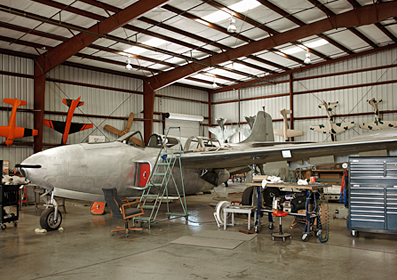
So you’ve thought about tackling an aircraft restoration project — but have no idea where to jump in. Fair enough. Hands-on restoration pulls you into a world most aviation fans only read about. It’s not just about rescuing an old airframe from obscurity; it’s about developing real technical instincts, sharpening your problem-solving, and getting comfortable with mechanical systems that actually matter. Doesn’t matter if you’ve logged years on the flight line or you’ve never held a rivet gun — these five projects are manageable enough for beginners yet meaty enough to teach you something lasting.
Fabric and Dope Restoration
Few projects open the door to vintage aircraft work quite like fabric and dope restoration. A huge number of classic planes use fabric-covered wings and fuselages — and that fabric degrades. It needs to come off. Then you repair the underlying structure, stretch fresh fabric, and lay down protective coatings. Sounds straightforward. It isn’t, exactly. Tension matters enormously here; get it wrong and you’ve compromised aerodynamic performance before the plane ever leaves the ground. You’ll learn different fabric grades, adhesive chemistry, and finishing sequences that form a bedrock of aircraft maintenance knowledge. Start small — one wing panel, one control surface. Build the muscle memory before you scale up.
See also: Auxiliary vs Distribution Transformers: Key Differences Explained
Windscreen and Window Restoration
This one’s approachable. No deep prior experience required. Acrylic and polycarbonate windscreens collect scratches, crazing, and hazing over years of UV exposure and weather abuse — and poor visibility is a safety issue, full stop. The work itself involves pulling damaged panels, cleaning mating surfaces, and fitting replacements with correct alignment. You’ll read technical drawings, learn fastener systems, and handle precision measurements. Sealants and gasket materials get introduced here too, which matters — aircraft weatherproofing depends on them more than most people realize. Finish this project and the results are immediate and obvious. That kind of visible payoff keeps beginners motivated.
Interior Panel and Component Restoration
Interior work lets you develop skills inside a controlled environment — no weather, no awkward outdoor lighting. Instrument panels, sidewalls, and overhead panels all need attention during serious restorations: refinishing, repainting, sometimes full rebuilds. You’ll get into electrical systems, instrument mounting, and cockpit organization in ways that ground-school theory never quite delivers. Aluminum work, composite materials, protective coatings — it’s all here. When professionals are rebuilding panels and verifying instruments in demanding shop conditions, they rely on quality Fluke Calibration tools to confirm measurements meet aircraft-grade standards. Documentation becomes critical fast. Label everything. Track where it came from. That discipline — knowing how systems integrate and where each piece belongs — is exactly what separates a careful restorer from someone who creates new problems while solving old ones.
Corrosion Treatment and Prevention
Corrosion treatment is non-negotiable. Every aircraft restoration touches it at some point. Aluminum and steel corrode — especially aircraft that lived near salt air or sat through years of neglect. Learning to identify corrosion types, remove them cleanly, and apply protective treatments is foundational work. You’ll handle chemicals, learn safety protocols, and understand environmental disposal considerations. But beyond the technical side, this project teaches a different kind of thinking: preventative. The decisions you make today — the primer you choose, the sealing technique you use — affect how that airframe looks in a decade. Master this, and your restoration work actually lasts.
Fastener Inspection and Replacement
Detail-oriented work. Precise, methodical, unforgiving of shortcuts. Aircraft fasteners are engineered to specific standards — wrong size, wrong material, wrong torque, and you’ve introduced a structural risk. This project teaches you fastener types, material grades, torque specifications for different applications, and the careful technique of extracting seized or corroded hardware without making the surrounding structure worse. It sounds tedious. It is, sometimes. But loose fasteners cause vibration failures. Vibration failures cascade. Getting this right reinforces something every experienced technician knows — there’s no such thing as a small detail in aircraft maintenance.
Conclusion
Each of these five projects delivers something concrete: real skills, real familiarity with aircraft systems, real confidence. Fabric work, window replacement, interior refinishing, corrosion treatment, fastener management — together they build a foundation that transfers directly into more complex restoration work later. Start where the scope feels achievable. Confidence comes from finishing things. And finishing things well, on aircraft, means understanding why precision matters at every step — not just the dramatic ones. That understanding, more than any single technique, is what aviation preservation actually demands.